
 SCIENTIFICALLY TESTED & COMPLETELY SAFE. SUITABLE FOR VEGETARIANS. NOT TESTED ON ANIMALS/NO ANIMAL INGREDIENTS. NO KNOWN SIDE EFFECTS. COMPLETELY SAFE. NON-TOXIC. FREE FROM HEAVY METALS

 The Food and Drug Administration has not evaluated these Statements. This product is classified as an “Herbal Food Supplement” and is not designed to diagnose, treat, cure, or prevent any disease. If you have any underlying health conditions, please consult a healthcare professional before using this product
 🌿 What is Kalpasi (Parmotrema perlatum)?
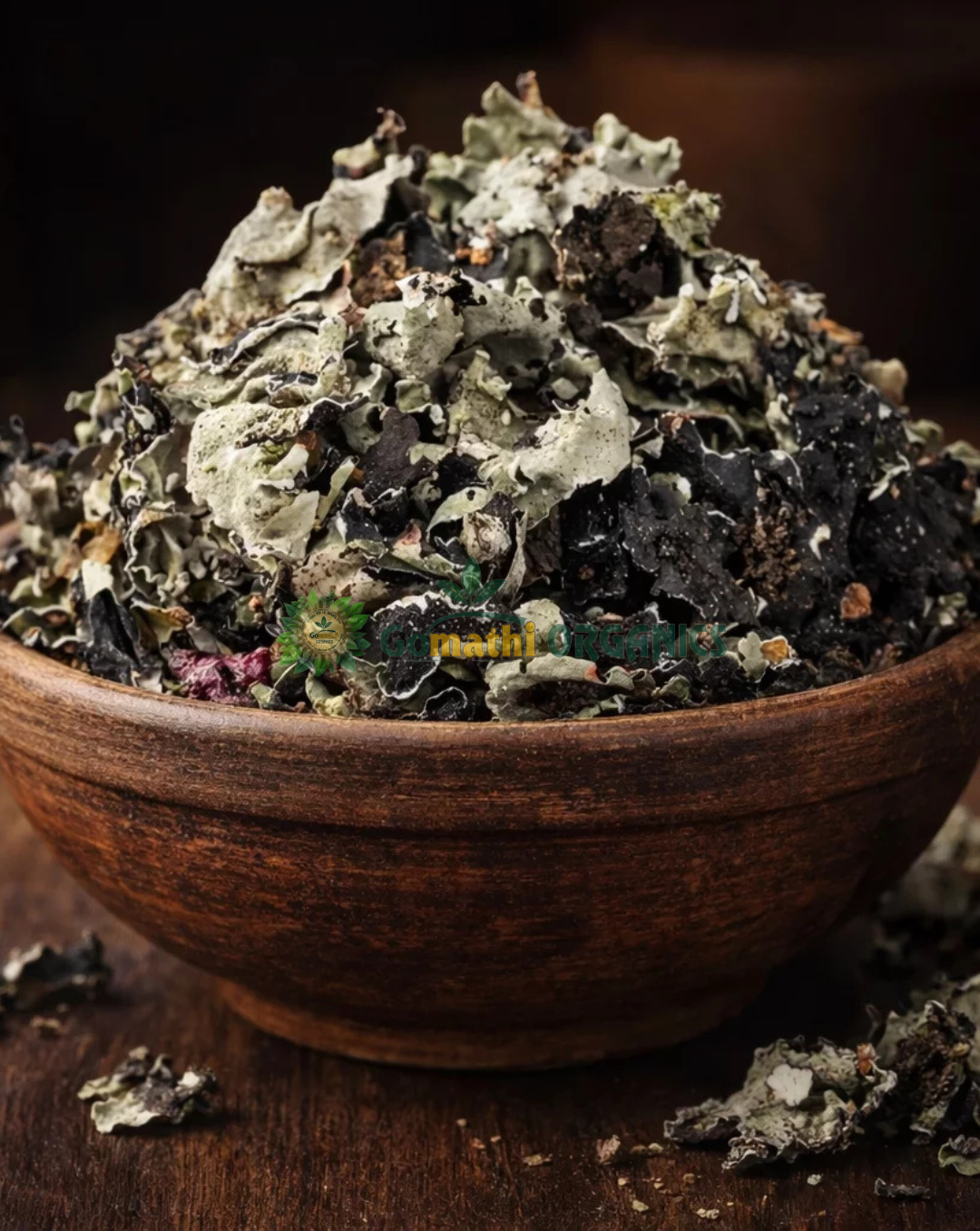
Kalpasi, commonly known as Black Stone Flower, is a naturally occurring lichen widely used as a traditional spice and herbal ingredient in Indian cuisine and traditional wellness practices. Scientifically known as Parmotrema perlatum, Kalpasi is neither a plant nor a flower but a symbiotic organism formed by fungi and algae. It is highly valued for its unique earthy aroma, smoky flavour, and culinary importance. Traditionally, Kalpasi has been used to support digestive wellness, antioxidant activity, and overall well-being. It is an essential ingredient in spice blends such as Chettinad Masala, Garam Masala, Biryani Masala, and various traditional herbal preparations.
🌱 Description of Kalpasi
Botanical Name: Parmotrema perlatum
Family: Parmeliaceae
Common Names: Black Stone Flower, Stone Flower, Dagad Phool, Patthar Phool
Type: Edible lichen (symbiotic organism of fungi and algae)
Colour: Dark grey to black on the upper surface and lighter grey underneath.
Texture: Thin, dry, leafy, brittle, and slightly velvety.
Fragrance: Mild earthy aroma that becomes stronger when roasted or cooked.
Appearance: Irregular leaf-like dried flakes with curled edges.
🌍 Habitat of Kalpasi
Kalpasi naturally grows on rocks, tree bark, and old wooden surfaces in cool, moist environments with clean air. It is commonly found in forest ecosystems and mountainous regions.
It is naturally found in:
- India
- Nepal
- Sri Lanka
- Bhutan
- Myanmar
- China
Within India, it is commonly collected from:
- Tamil Nadu
- Kerala
- Karnataka
- Himachal Pradesh
- Uttarakhand
- Western Ghats
- Eastern Himalayan regions
🌟 Traditional Wellness Benefits of Kalpasi
Digestive Wellness
Traditionally used to support healthy digestion when included as part of a balanced diet.
Antioxidant Support
Contains naturally occurring compounds that contribute to antioxidant activity.
Culinary Wellness
Traditionally valued for enhancing the flavour, aroma, and richness of various dishes.
General Wellness
Traditionally included in herbal and culinary preparations that support overall well-being.
Natural Seasoning
Provides a unique smoky, earthy flavour without artificial additives.
Herbal Tradition
Widely used in Siddha and Ayurvedic formulations as a traditional herbal ingredient.
🧪 Active Compounds in Kalpasi
Kalpasi naturally contains several beneficial compounds, including:
Lichen Acids
Naturally occurring compounds characteristic of edible lichens.
Usnic Acid
A naturally occurring lichen-derived compound.
Polyphenols
Beneficial plant-associated compounds that contribute to antioxidant activity.
Natural Antioxidants
Help protect cells from oxidative stress caused by free radicals.
Natural Phytochemicals
Support the traditional wellness value of Kalpasi.
🍵 Usage and Dosage
Culinary Use
Kalpasi is commonly added to:
- Biryani
- Chettinad Curry
- Garam Masala
- Spice Blends
- Kurma
- Gravy Dishes
- Soups
Suggested Quantity
Use 1–2 small pieces or ¼ teaspoon in recipes depending on the serving size.
Traditional Use
Kalpasi is often dry roasted in oil or ghee before adding other spices to enhance its aroma and flavour.
⚠️ Precautions
Moderate Consumption
Use only in culinary quantities as part of a balanced diet.
Quality
Choose clean, naturally dried Kalpasi free from dust, stones, and impurities.
Allergic Reactions
Discontinue use if any allergic reaction occurs.
Storage
Store in an airtight container in a cool, dry place away from moisture and direct sunlight.
🌿 Organic and Ethical Considerations
Purity
Choose Kalpasi free from artificial colours, preservatives, additives, and fillers.
Sustainable Collection
Prefer responsibly harvested products that protect natural ecosystems.
Quality Assurance
Purchase hygienically processed and quality-tested products whenever available.
Traditional Preparation
Traditionally, Kalpasi is carefully collected from natural forest habitats, cleaned to remove dust and impurities, naturally shade-dried, and hygienically packed to preserve its aroma, flavour, and quality.
Traditional Uses
- Culinary seasoning
- Spice blends
- Biryani preparation
- Chettinad cuisine
- Digestive wellness
- Antioxidant support
- Siddha preparations
- Ayurvedic formulations
- Herbal ingredient
- General wellness
Botanical Name
Parmotrema perlatum
Common Name
- Kalpasi
- Black Stone Flower
- Stone Flower
- Dagad Phool
- Patthar Phool

Reviews
There are no reviews yet.